Hey baseball fans!
The MLB offseason has already been packed with excitement, as teams are already signing players to gigantic contracts. The question is, however, will the contracts be worth it? In this mini-series on Baseball with Matt, I will be examining the careers of current baseball players after they signed huge contracts to see whether the team that signed them has gotten enough back in return. For this post, let's check out the career of one of the most underrated hitters in baseball: Adrian Beltre.
Before the Big Bucks:
Adrian Beltre has been playing in the MLB for an extremely long time, since 1998 to be exact, and his first couple of years weren't filled with excitement. In the first six years of his career, which were played with the Dodgers, the third baseman never hit more than 23 homers in a season. But in 2004, he exploded, leading the league with 48 dingers with a .334 batting average and 121 RBIs. He placed second in the MVP voting and won his first career Silver Slugger that year. In the next six years of his career, he continued to post solid stats, averaging about 22 homers a season. He also collected his first two career Gold Gloves and made his first All Star Game in 2010. But after the 2010 campaign, which he played with the Red Sox, he was granted free agency. On January 6, 2011, Beltre signed a monster 6-year, $96 million deal with the Texas Rangers.
After the Signing:
I think it's safe to say that although $96 million is a lot of money, this deal was definitely worth it for the Rangers. In my opinion, even though he is not always recognized for it, Adrian Beltre has become one of the best third basemen in baseball. From 2011-2016, he's batted a solid .308, averaging 28 home runs and 94 RBIs a season. He's made three more All Star Games (2011, 2012, and 2014) and was even the starting third baseman for the AL for the '11 and '12 ASG. But perhaps the biggest reason why this deal was worth it for the Rangers was Beltre's insane fielding ability. He's won the Gold Glove at third base for the AL in four of the last six years. Oh, and did I mention that Beltre's unbelievable leadership and play has led the Rangers to four playoff births since 2011, including a trip to the 2011 World Series?
The bottom line is that if Beltre continues his dominance for another few years, he will absolutely be a Hall of Famer, despite the fact that he tries to make contact with the wildest of pitches. His time with the Rangers has made him the legend that he is. Thanks for reading this post and I hope you enjoyed it. Check back soon for more of "all the buzz on what wuzz."
Saturday, December 31, 2016
Saturday, December 24, 2016
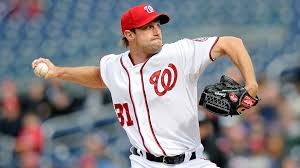
Was It Worth It: Max Scherzer and the Nationals 12/24/16
Hey baseball fans!
The MLB offseason has already been packed with excitement, as teams are already signing players to gigantic contracts. The question is, however, will the contracts be worth it? In this mini-series on Baseball with Matt, I will be examining the careers of current baseball players after they signed huge contracts to see whether the team that signed them has gotten enough back in return. The first player I analyzed was Albert Pujols, but now let's travel to the mound to look at the career of Max Scherzer before and after he signed for big bucks to play in our nation's capital.
Before the Big Bucks:
Max Scherzer started his career with the Diamondbacks in 2008 and was traded to the Tigers following the 2009 season. The pitcher with different-colored eyes was just an alright pitcher for the first five years of his career. His best year in that timespan was 2012, when he went 16-7 with a 3.74 ERA. There were flashes of greatness, but he wasn't an All Star pitcher until 2013. That year with Detroit, he went 21-3 (those 21 wins led the league) with an ERA of 2.90, led the league with a 0.970 WHIP, was the AL starting pitcher at the All Star Game, and won the Cy Young Award. The next year, he again led the league in wins with 17 and again made the All Star Game. But following the 2014 season, he was granted free agency and signed a 7 year, $210 million contract with the Washington Nationals.
After Signing:
Boy, was this a great move for D.C. Sure, it's a lot of money, but it's been extremely worth it considering Scherzer is still one of the best pitchers in baseball. His record wasn't so hot in 2015, going just 14-12, but his ERA was his best of his career at 2.79. He made the NL All Star team, led the league in complete games and shutouts, and placed fifth in Cy Young Award voting. In 2016, he won a league-leading 20 games with a 2.96 ERA, led the league in strikeouts (284) and WHIP (0.968), made the All Star Game, and won his second career Cy Young Award. On top of that, he led a talented Nationals team to an NL East title. Seriously, this guy has been an insane pitcher in the National League. Speaking of pitching in the NL, Scherzer also had 12 RBIs in 2016. Wow!!
Max Scherzer is one of the most important reasons why the Nationals are a force to be reckoned with in the National League every single year. So, in conclusion, this deal has definitely been worth it so far for the Nats. Who knows what Scherzer will turn into in the last five years of his contract, but he doesn't seem to be slowing down any time soon. Thanks for reading this post and I hope you enjoyed it. Check back soon for more of "all the buzz on what wuzz."
The MLB offseason has already been packed with excitement, as teams are already signing players to gigantic contracts. The question is, however, will the contracts be worth it? In this mini-series on Baseball with Matt, I will be examining the careers of current baseball players after they signed huge contracts to see whether the team that signed them has gotten enough back in return. The first player I analyzed was Albert Pujols, but now let's travel to the mound to look at the career of Max Scherzer before and after he signed for big bucks to play in our nation's capital.
Before the Big Bucks:
Max Scherzer started his career with the Diamondbacks in 2008 and was traded to the Tigers following the 2009 season. The pitcher with different-colored eyes was just an alright pitcher for the first five years of his career. His best year in that timespan was 2012, when he went 16-7 with a 3.74 ERA. There were flashes of greatness, but he wasn't an All Star pitcher until 2013. That year with Detroit, he went 21-3 (those 21 wins led the league) with an ERA of 2.90, led the league with a 0.970 WHIP, was the AL starting pitcher at the All Star Game, and won the Cy Young Award. The next year, he again led the league in wins with 17 and again made the All Star Game. But following the 2014 season, he was granted free agency and signed a 7 year, $210 million contract with the Washington Nationals.
After Signing:
Boy, was this a great move for D.C. Sure, it's a lot of money, but it's been extremely worth it considering Scherzer is still one of the best pitchers in baseball. His record wasn't so hot in 2015, going just 14-12, but his ERA was his best of his career at 2.79. He made the NL All Star team, led the league in complete games and shutouts, and placed fifth in Cy Young Award voting. In 2016, he won a league-leading 20 games with a 2.96 ERA, led the league in strikeouts (284) and WHIP (0.968), made the All Star Game, and won his second career Cy Young Award. On top of that, he led a talented Nationals team to an NL East title. Seriously, this guy has been an insane pitcher in the National League. Speaking of pitching in the NL, Scherzer also had 12 RBIs in 2016. Wow!!
Max Scherzer is one of the most important reasons why the Nationals are a force to be reckoned with in the National League every single year. So, in conclusion, this deal has definitely been worth it so far for the Nats. Who knows what Scherzer will turn into in the last five years of his contract, but he doesn't seem to be slowing down any time soon. Thanks for reading this post and I hope you enjoyed it. Check back soon for more of "all the buzz on what wuzz."
Wednesday, December 14, 2016
Was It Worth It: Albert Pujols and the Angels 12/14/16
Hey baseball fans!
The Winter Meetings are here and teams are already signing players to gigantic contracts. The question is, however, will the contracts be worth it? In this new mini-series on Baseball with Matt, I will be examining the careers of current baseball players after they signed huge contracts and seeing if the team that signed them has gotten enough back in return. The first player I am analyzing will be Albert Pujols.
Before the Big Bucks:
From 2001-2011, Albert Pujols was perhaps the best player in baseball. A first baseman for the Cardinals, Prince Albert batted .328 with an average of 40 home runs and 121 RBIs per season during those years. He made nine All Star Games and won the NL MVP three times. He also helped the Cardinals win the 2006 and 2011 World Series. But after the 2011 season, Pujols was granted free agency and signed a ten-year, $240 million contract with the Los Angeles Angels. What a big contract, right? Well, at the time, Pujols was one of the best of the best in the MLB and the Angels needed some help in the lineup. Since then, however, things have not been the same for the slugging future Hall of Famer.
After Signing:
After playing with the Angels for five seasons, in my opinion, it's safe to say that this deal was not worth it for LA and here's why. Sure, Albert has averaged 29 home runs a season in Southern California, but other than that, his numbers have been significantly worse. His batting average per season with the Angels is a mediocre .266, 62 points lower than when playing by the Arch. His difference in slugging percentage is even worse: .474 compared to .617. And don't even get me started on his WAR: 7.8 per season in St. Louis and only 2.9 in LA. On top of all this, since 2012, the Angels have only made one playoff appearance, a 2014 AL West Division title, and in that appearance, they were swept in the first round. I don't think this sudden decline was really expected by the MLB community, but it's clear now why Pujols's stats have worsened since the 2011 season and it's not his fault: age. His body is starting to slow down, but it started slowing down at a rate that the Angels probably never saw coming. So, in conclusion, although Pujols has still put up solid numbers, they aren't what we have long considered to be "Albert Pujols numbers," so the deal was not worth it.
An Alternative:
The Angels aren't exactly known for their pitching. In 2016, LA's pitching staff had an ERA of 4.28, good for 21st in baseball. Their hitting wasn't too good last year either, but it's on the pitcher's mound where there is a real concern. They also only saved 29 games last year, which was 28th in the MLB last year. Imagine if instead of signing Pujols in 2011, they traded for a guy like Yoenis Cespedes and then signed him on a much cheaper and shorter deal and in this past offseason signed someone like Kenley Jansen to improve the bullpen.
I'm not saying that I hate Albert Pujols. In fact, he's one of my favorite players right now and I'm always rooting for him to put up great stats. But the bottom line is that he's not the same first baseman from ten years ago. The Angels' franchise would be in a much better place right now if they hadn't spent that much money on him. Thanks for reading this post and I hope you enjoyed it. Check back soon for more of "all the buzz on what wuzz."
The Winter Meetings are here and teams are already signing players to gigantic contracts. The question is, however, will the contracts be worth it? In this new mini-series on Baseball with Matt, I will be examining the careers of current baseball players after they signed huge contracts and seeing if the team that signed them has gotten enough back in return. The first player I am analyzing will be Albert Pujols.
Before the Big Bucks:
From 2001-2011, Albert Pujols was perhaps the best player in baseball. A first baseman for the Cardinals, Prince Albert batted .328 with an average of 40 home runs and 121 RBIs per season during those years. He made nine All Star Games and won the NL MVP three times. He also helped the Cardinals win the 2006 and 2011 World Series. But after the 2011 season, Pujols was granted free agency and signed a ten-year, $240 million contract with the Los Angeles Angels. What a big contract, right? Well, at the time, Pujols was one of the best of the best in the MLB and the Angels needed some help in the lineup. Since then, however, things have not been the same for the slugging future Hall of Famer.
After Signing:
After playing with the Angels for five seasons, in my opinion, it's safe to say that this deal was not worth it for LA and here's why. Sure, Albert has averaged 29 home runs a season in Southern California, but other than that, his numbers have been significantly worse. His batting average per season with the Angels is a mediocre .266, 62 points lower than when playing by the Arch. His difference in slugging percentage is even worse: .474 compared to .617. And don't even get me started on his WAR: 7.8 per season in St. Louis and only 2.9 in LA. On top of all this, since 2012, the Angels have only made one playoff appearance, a 2014 AL West Division title, and in that appearance, they were swept in the first round. I don't think this sudden decline was really expected by the MLB community, but it's clear now why Pujols's stats have worsened since the 2011 season and it's not his fault: age. His body is starting to slow down, but it started slowing down at a rate that the Angels probably never saw coming. So, in conclusion, although Pujols has still put up solid numbers, they aren't what we have long considered to be "Albert Pujols numbers," so the deal was not worth it.
An Alternative:
The Angels aren't exactly known for their pitching. In 2016, LA's pitching staff had an ERA of 4.28, good for 21st in baseball. Their hitting wasn't too good last year either, but it's on the pitcher's mound where there is a real concern. They also only saved 29 games last year, which was 28th in the MLB last year. Imagine if instead of signing Pujols in 2011, they traded for a guy like Yoenis Cespedes and then signed him on a much cheaper and shorter deal and in this past offseason signed someone like Kenley Jansen to improve the bullpen.
I'm not saying that I hate Albert Pujols. In fact, he's one of my favorite players right now and I'm always rooting for him to put up great stats. But the bottom line is that he's not the same first baseman from ten years ago. The Angels' franchise would be in a much better place right now if they hadn't spent that much money on him. Thanks for reading this post and I hope you enjoyed it. Check back soon for more of "all the buzz on what wuzz."
Sunday, December 4, 2016
Hispanic Baseball Last Name Vocab Quiz! 12/4/16
Hey baseball fans!
One of the things I love about baseball is how international it is, specifically how many Latin American players get the chance to play in the MLB. However, do you know what the last names of some familiar Spanish-speaking baseball players mean? That's what this post is for.
Last Name: Céspedes
Player with this last name: Yoenis Céspedes
Meaning: Lawns
Last Name: Posada
Player with this last name: Jorge Posada
Meaning: Inn
Last Name: Rivera
Player with this last name: Mariano Rivera
Meaning: Brook
Last Name: Cabrera
Players with this last name: Miguel Cabrera, Asdrubal Cabrera
Meaning: Goatherd
Last Name: Clemente
Player with this last name: Roberto Clemente
Meaning: Merciful
Last Name: Castillo
Player with this last name: Luis Castillo
Meaning: Castle
Last Name: Correa
Player with this last name: Carlos Correa
Meaning: Strap
Last Name: Last Name: Gallardo
Player with this last name: Yovani Gallardo
Meaning: Gallant
Last Name: Guerrero
Player with this last name: Vladimir Guerrero
Meaning: Warrior
Last Name: Delgado
Player with this last name: Carlos Delgado
Meaning: Thin
Last Name: Bautista
Player with this last name: Jose Bautista
Meaning: Baptist
Last Name: Garza
Player with this last name: Matt Garza
Meaning: Heron
Some of these meanings are extremely allegorical. Roberto Clemente was known for his charitable nature and Vlad Guerrero fought off every pitch thrown at him. Others make absolutely no sense. I don't think that Matt Garza would compare himself to a heron. And some are very funny. I would totally stay at a hotel called "Jorge's Posada." Any way, did you know any of the meanings to these last names? Leave more Hispanic baseball surnames in the comments section below with their translations. Thanks for reading this post and I hope you enjoyed it. Check back soon for more of "all the buzz on what wuzz."
One of the things I love about baseball is how international it is, specifically how many Latin American players get the chance to play in the MLB. However, do you know what the last names of some familiar Spanish-speaking baseball players mean? That's what this post is for.
Last Name: Céspedes
Player with this last name: Yoenis Céspedes
Meaning: Lawns
Last Name: Posada
Player with this last name: Jorge Posada
Meaning: Inn
Last Name: Rivera
Player with this last name: Mariano Rivera
Meaning: Brook
Last Name: Cabrera
Players with this last name: Miguel Cabrera, Asdrubal Cabrera
Meaning: Goatherd
Last Name: Clemente
Player with this last name: Roberto Clemente
Meaning: Merciful
Last Name: Castillo
Player with this last name: Luis Castillo
Meaning: Castle
Last Name: Correa
Player with this last name: Carlos Correa
Meaning: Strap
Last Name: Last Name: Gallardo
Player with this last name: Yovani Gallardo
Meaning: Gallant
Last Name: Guerrero
Player with this last name: Vladimir Guerrero
Meaning: Warrior
Last Name: Delgado
Player with this last name: Carlos Delgado
Meaning: Thin
Last Name: Bautista
Player with this last name: Jose Bautista
Meaning: Baptist
Last Name: Garza
Player with this last name: Matt Garza
Meaning: Heron
Some of these meanings are extremely allegorical. Roberto Clemente was known for his charitable nature and Vlad Guerrero fought off every pitch thrown at him. Others make absolutely no sense. I don't think that Matt Garza would compare himself to a heron. And some are very funny. I would totally stay at a hotel called "Jorge's Posada." Any way, did you know any of the meanings to these last names? Leave more Hispanic baseball surnames in the comments section below with their translations. Thanks for reading this post and I hope you enjoyed it. Check back soon for more of "all the buzz on what wuzz."
Tuesday, November 22, 2016
Out with the Old 30, and In with the New MVP 11/22/16
Hey baseball fans!
It is the 55th anniversary of Frank Robinson being named NL MVP for the Cincinnati Reds during the 1961 MLB season. Robinson's '61 campaign was definitely deserving of the award, as he batted .323 with 37 home runs and 124 runs batted in. His monstrous .611 slugging percentage led the league that year and his efforts helped the Reds reach their first World Series since 1940, where they sadly lost to the Yankees. The man they called "The Judge" was in the middle of an unbelievable career and was one of the young stars of baseball. However, after the 1965 season, Reds owner Bill DeWitt decided to trade Robinson from Cinci to the Baltimore Orioles because he thought that the slugging Texas native was "not a young 30." This trade has come to be known as one of the most lopsided trades in MLB history and one of the reasons for that is what Robinson did the season directly after he was sent to Charm City.
I'm going to be very blunt about this: he won the Triple Crown. Yeah, that's right; in Frank Robinson's first season after he was sent to the O's, he batted .316 with 49 home runs and 122 RBIs, which all led the league, giving him the Triple Crown. And just to rub it in DeWitt's face, Robinson also led the league in runs scored (122), on-base percentage (.410), slugging percentage (.637), and total bases (367). And to rub it in DeWitt's face even more, Robinson's explosive, AL MVP-winning campaign helped the Orioles win the franchise's first World Series with a sweep of the Dodgers in the 1966 Fall Classic. Wow, for an old guy, he sure could swing the bat well.
With the 1966 AL MVP under his belt, Frank Robinson became the only player in baseball history to win the MVP for teams in both leagues. Really, what an ignorant move by the Reds' front office to trade a man who would go on to finish his career with 586 home runs, tenth-most all time. And no wonder that Frank chose to wear an O's cap on his Hall of Fame plaque! Thanks for reading this post and I hope you enjoyed it. Check back soon for more of "all the buzz on what wuzz."
It is the 55th anniversary of Frank Robinson being named NL MVP for the Cincinnati Reds during the 1961 MLB season. Robinson's '61 campaign was definitely deserving of the award, as he batted .323 with 37 home runs and 124 runs batted in. His monstrous .611 slugging percentage led the league that year and his efforts helped the Reds reach their first World Series since 1940, where they sadly lost to the Yankees. The man they called "The Judge" was in the middle of an unbelievable career and was one of the young stars of baseball. However, after the 1965 season, Reds owner Bill DeWitt decided to trade Robinson from Cinci to the Baltimore Orioles because he thought that the slugging Texas native was "not a young 30." This trade has come to be known as one of the most lopsided trades in MLB history and one of the reasons for that is what Robinson did the season directly after he was sent to Charm City.
I'm going to be very blunt about this: he won the Triple Crown. Yeah, that's right; in Frank Robinson's first season after he was sent to the O's, he batted .316 with 49 home runs and 122 RBIs, which all led the league, giving him the Triple Crown. And just to rub it in DeWitt's face, Robinson also led the league in runs scored (122), on-base percentage (.410), slugging percentage (.637), and total bases (367). And to rub it in DeWitt's face even more, Robinson's explosive, AL MVP-winning campaign helped the Orioles win the franchise's first World Series with a sweep of the Dodgers in the 1966 Fall Classic. Wow, for an old guy, he sure could swing the bat well.
With the 1966 AL MVP under his belt, Frank Robinson became the only player in baseball history to win the MVP for teams in both leagues. Really, what an ignorant move by the Reds' front office to trade a man who would go on to finish his career with 586 home runs, tenth-most all time. And no wonder that Frank chose to wear an O's cap on his Hall of Fame plaque! Thanks for reading this post and I hope you enjoyed it. Check back soon for more of "all the buzz on what wuzz."
Saturday, November 12, 2016
My 2016 MLB Awards Prediction Video 11/12/16
Hey baseball fans!
Since the 2016 season is officially over, it's time for the week where everyone debates about who is going to win the four major MLB offseason awards in each league: Manager of the Year, Rookie of the Year, Cy Young Award, and MVP. If you want to know who I think will win each award, click here to see my predictions.
Thanks for watching the video and I hope you enjoyed it. Check back soon for more of "all the buzz on what wuzz."
Since the 2016 season is officially over, it's time for the week where everyone debates about who is going to win the four major MLB offseason awards in each league: Manager of the Year, Rookie of the Year, Cy Young Award, and MVP. If you want to know who I think will win each award, click here to see my predictions.
Thanks for watching the video and I hope you enjoyed it. Check back soon for more of "all the buzz on what wuzz."
Tuesday, November 8, 2016
These Teams Need Water Quickly! (Get it? Drought?) 11/8/16
Hey baseball fans!
The Chicago Cubs won their first World Series since 1908, thus erasing their 108-year championship drought. So, who has the longest drought now and when will it end? In this post, I will try to predict the end to the six current longest championship droughts in MLB history.
Number Six (Tied): Washington Nationals
Last championship: N/A (joined the MLB in 1969 as the Montreal Expos)
Chances to break the curse: The one time the Nationals even came close to winning (let alone making) the World Series came in 1981, when the then-Expos faced the Dodgers in the NLCS, where LA won in five in the then-best-of-five series.
When will they win and why? I'd say within the next five years. Washington has been good for a long time and will continue to make many postseasons to come. Soon, they will become experienced enough in playing baseball during October that they will make and win the World Series.
Number Six (Tied): San Diego Padres
Last championship: N/A (joined the MLB in 1969)
Chances to break the curse: San Diego won the NL pennant in 1984 and 1998, but lost the Fall Classic to the Tigers and Yankees, respectively. They have won exactly one World Series game in franchise history.
When will they win and why? By the end of the half-century. Not to be pessimistic, Padres fans, but your team's division has two juggernaut teams and two up-and-coming teams. However, once the Padres manage to overcome the beast that is the NL West, which will definitely be before 2050, they will definitely be able to cruise through the rest of the NL on the way to their first World Series championship.
Number Six (Tied): Milwaukee Brewers
Last championship: N/A (joined the MLB in 1969 as the Seattle Pilots, moved from AL to NL prior to the 1998 season)
Chances to break the curse: The Brew Crew made the World Series in 1982 as the AL representative, but lost the Series to the Cardinals in seven, hard-fought games.
When will they win and why? Within the next 20 years. The NL Central has become a lot more competitive since Milwaukee's 2011 NL Central division first-place finish and compared to the other teams in the division, it doesn't look good in Wisconsin to even make the playoffs. But at the same time, teams in that division always seem to fluctuate up and down the MLB standings year by year, so there is a good chance that the Brewers will win the Fall Classic sooner rather than later.
Number Three: Houston Astros
Last championship: N/A (joined the MLB in 1962 as the Houston Colt .45s)
Chances to break the curse: The Astros lost the 2005 World Series to the White Sox in a sweep in the franchise's only World Series appearance.
When will they win and why? In less than 10 years. Houston right now is a very young, inexperienced team. However, they can compete with anyone in the regular season. Once the young squad becomes full of postseason veterans, then they will win the rings.
Number Two: Texas Rangers
Last championship: N/A (joined the MLB in 1961 as the Washington Senators)
Chances to break the curse: Texas won back-to-back AL pennants in 2010 and 2011, but lost both World Series to the Giants and Cardinals, respectively. (See? What did I say about those NL Central and West teams?)
When will they win and why? In less than 10 years. The Rangers got good again in 2015 because of a strong nucleus of solid players. I can see them contending for the title as early as next season.
Number One: Cleveland Indians
Last championship: 1948
Chances to break the curse: In 1954, they were swept by the Giants. In 1995, pitching beat hitting as the Braves took the title away from them. In 1997, the upstart Marlins finished their amazing season with a Fall Classic victory over the Indians in a dramatic, seven-game series. In 2016, well, you know.
When will they win and why? 2018. I don't want to give my way-too-early prediction for the 2017 World Series winner before free agency, so I'll play it safe and say the Indians will end their championship drought a year later. They're just a good, all-around team. It's as simple as that.
When do you think your favorite team will win their next World Series? Let me know in the comments section down below. Thanks for reading this post and I hope you enjoyed it. Check back soon for more of "all the buzz on what wuzz."
The Chicago Cubs won their first World Series since 1908, thus erasing their 108-year championship drought. So, who has the longest drought now and when will it end? In this post, I will try to predict the end to the six current longest championship droughts in MLB history.
Number Six (Tied): Washington Nationals
Last championship: N/A (joined the MLB in 1969 as the Montreal Expos)
Chances to break the curse: The one time the Nationals even came close to winning (let alone making) the World Series came in 1981, when the then-Expos faced the Dodgers in the NLCS, where LA won in five in the then-best-of-five series.
When will they win and why? I'd say within the next five years. Washington has been good for a long time and will continue to make many postseasons to come. Soon, they will become experienced enough in playing baseball during October that they will make and win the World Series.
Number Six (Tied): San Diego Padres
Last championship: N/A (joined the MLB in 1969)
Chances to break the curse: San Diego won the NL pennant in 1984 and 1998, but lost the Fall Classic to the Tigers and Yankees, respectively. They have won exactly one World Series game in franchise history.
When will they win and why? By the end of the half-century. Not to be pessimistic, Padres fans, but your team's division has two juggernaut teams and two up-and-coming teams. However, once the Padres manage to overcome the beast that is the NL West, which will definitely be before 2050, they will definitely be able to cruise through the rest of the NL on the way to their first World Series championship.
Number Six (Tied): Milwaukee Brewers
Last championship: N/A (joined the MLB in 1969 as the Seattle Pilots, moved from AL to NL prior to the 1998 season)
Chances to break the curse: The Brew Crew made the World Series in 1982 as the AL representative, but lost the Series to the Cardinals in seven, hard-fought games.
When will they win and why? Within the next 20 years. The NL Central has become a lot more competitive since Milwaukee's 2011 NL Central division first-place finish and compared to the other teams in the division, it doesn't look good in Wisconsin to even make the playoffs. But at the same time, teams in that division always seem to fluctuate up and down the MLB standings year by year, so there is a good chance that the Brewers will win the Fall Classic sooner rather than later.
Number Three: Houston Astros
Last championship: N/A (joined the MLB in 1962 as the Houston Colt .45s)
Chances to break the curse: The Astros lost the 2005 World Series to the White Sox in a sweep in the franchise's only World Series appearance.
When will they win and why? In less than 10 years. Houston right now is a very young, inexperienced team. However, they can compete with anyone in the regular season. Once the young squad becomes full of postseason veterans, then they will win the rings.
Number Two: Texas Rangers
Last championship: N/A (joined the MLB in 1961 as the Washington Senators)
Chances to break the curse: Texas won back-to-back AL pennants in 2010 and 2011, but lost both World Series to the Giants and Cardinals, respectively. (See? What did I say about those NL Central and West teams?)
When will they win and why? In less than 10 years. The Rangers got good again in 2015 because of a strong nucleus of solid players. I can see them contending for the title as early as next season.
Number One: Cleveland Indians
Last championship: 1948
Chances to break the curse: In 1954, they were swept by the Giants. In 1995, pitching beat hitting as the Braves took the title away from them. In 1997, the upstart Marlins finished their amazing season with a Fall Classic victory over the Indians in a dramatic, seven-game series. In 2016, well, you know.
When will they win and why? 2018. I don't want to give my way-too-early prediction for the 2017 World Series winner before free agency, so I'll play it safe and say the Indians will end their championship drought a year later. They're just a good, all-around team. It's as simple as that.
When do you think your favorite team will win their next World Series? Let me know in the comments section down below. Thanks for reading this post and I hope you enjoyed it. Check back soon for more of "all the buzz on what wuzz."
Subscribe to:
Posts (Atom)


