Hey baseball fans!
Kevin Kiermaier is the center fielder for the Tampa Bay Rays. A couple of years ago, Kiermaier got a massive contract extension to stay in Florida. Well, the extension itself wouldn't be big to Mike Trout, but for a guy who only hits in the low .200s with barely 10 home runs a season, it was a massive contract extension. Yes, he's a three-time Gold Glover and someone who's known for robbing homers like it's his job, but why did the Rays give their outfielder a spanking new contract just for being an above-average fielder? The answer? Defensive runs saved.
Defensive runs saved is a statistic used to determine, well, how many runs on defense a player saves by making a play. There's a lot of averaging out and conversion that goes into the formula, but at its core, DRS is calculated in the following way. Say an outfielder makes a play that was 35% possible. That would mean that the fielder gets .65 points added into the DRS formula. Again, there's a lot more math that happens with that .65, but basically, if a fielder makes hard plays that prevent lots of runs, they have a high DRS. The same thing goes in the opposite direction. Let's say a shortstop boots an easy grounder that has an 80% success rate. Well, for his DRS metric, he gets .8 points deducted from his score.
Kevin Kiermaier saved a whopping 42 runs in 2015 according to his DRS calculation, a number that the Rays thought was quite valuable to their winning ways. The all-time leader in DRS is Adrian Beltre at 212, but keep in mind that this statistic is very new, and that if data was calculated for it going back into the 1800s, you'd probably see Ozzie Smith or Brooks Robinson at the top of the all-time DRS rankings. But you know who has the lowest all-time DRS? Derek Jeter at -152! I guess "The Flip" was really an anomaly, especially for the Captain.
Thanks for reading this post and I hope you enjoyed it. Check back soon for more of "all the buzz on what wuzz."
Saturday, April 25, 2020
Tuesday, April 14, 2020
The Case (or Lack Of One) for Dennis Martinez 4/14/20
Hey baseball fans!
In a time of uncertainty, all eyes lie on the President to see what he does next. But for right now, let's talk about El Presidente. That's right: it's a Dennis Martinez post!
Dennis Martinez pitched for a number of teams, most notably the Orioles, Expos, and Indians, during a 23-year career from 1976-1998. An overall chipper guy, Martinez was the first ever Nicaraguan to pitch in the majors, a feat that hasn't been accomplished as much as you'd think since his retirement. Martinez had a 3.70 ERA during his years in baseball with a record of 245-193 and 2,149 strikeouts. He posted at least ten wins in a season 15 times, nine of those years consecutively, and twice finished in the top five for the Cy Young vote. Martinez got less than the 5% required to stay on the Hall of Fame ballot after his first year of eligibility in 2004, but that doesn't mean that the four-time All Star deserves zero praise. Even though he went 7-16 in 1983 with an ERA towards six, he still was on the '83 Orioles when they beat the Phillies in that year's World Series. His best year in Baltimore was arguably 1981, when he won 14 games in a strike-shortened season with a 3.32 ERA, his best seasonal ERA in Charm City. Only after his trade to Montreal did Martinez really become El Presidente.
From 1987-1993, you could argue that Martinez was in the same elite tier as Greg Maddux. I mean, you would lose the argument, but not by much! Martinez's years in Montreal were a sort of renaissance for him, as he posted a 2.96 ERA, 96 wins, and a 1.14 WHIP during the span. But his greatest achievement north of the border actually came in a game in Los Angeles. On Sunday, July 28, 1991, El President was el perfecto, pitching a perfect game against the Dodgers, thereby becoming the first pitcher born outside the United States to pitch a perfect game. It came in the midst of Martinez's best yearly ERA (2.39, which led the league) and his second of three consecutive All Star nods. The game itself was notable for a few reasons. Dodger Stadium became the first stadium to witness two perfect games (Sandy Koufax in 1965 was the first) and the Dodgers became the first team to lose consecutive perfect games (Tom Browning's perfecto against LA in 1988 was the one immediately before Martinez's).
Despite his resurgence with the Expos, Martinez was too inefficient earlier in his career to be considered a Hall of Famer in my book, but he'll always be one in the hearts of Expos fans. Thanks for reading this post and I hope you enjoyed it. Check back soon for more of "all the buzz on what wuzz."
In a time of uncertainty, all eyes lie on the President to see what he does next. But for right now, let's talk about El Presidente. That's right: it's a Dennis Martinez post!
Dennis Martinez pitched for a number of teams, most notably the Orioles, Expos, and Indians, during a 23-year career from 1976-1998. An overall chipper guy, Martinez was the first ever Nicaraguan to pitch in the majors, a feat that hasn't been accomplished as much as you'd think since his retirement. Martinez had a 3.70 ERA during his years in baseball with a record of 245-193 and 2,149 strikeouts. He posted at least ten wins in a season 15 times, nine of those years consecutively, and twice finished in the top five for the Cy Young vote. Martinez got less than the 5% required to stay on the Hall of Fame ballot after his first year of eligibility in 2004, but that doesn't mean that the four-time All Star deserves zero praise. Even though he went 7-16 in 1983 with an ERA towards six, he still was on the '83 Orioles when they beat the Phillies in that year's World Series. His best year in Baltimore was arguably 1981, when he won 14 games in a strike-shortened season with a 3.32 ERA, his best seasonal ERA in Charm City. Only after his trade to Montreal did Martinez really become El Presidente.
From 1987-1993, you could argue that Martinez was in the same elite tier as Greg Maddux. I mean, you would lose the argument, but not by much! Martinez's years in Montreal were a sort of renaissance for him, as he posted a 2.96 ERA, 96 wins, and a 1.14 WHIP during the span. But his greatest achievement north of the border actually came in a game in Los Angeles. On Sunday, July 28, 1991, El President was el perfecto, pitching a perfect game against the Dodgers, thereby becoming the first pitcher born outside the United States to pitch a perfect game. It came in the midst of Martinez's best yearly ERA (2.39, which led the league) and his second of three consecutive All Star nods. The game itself was notable for a few reasons. Dodger Stadium became the first stadium to witness two perfect games (Sandy Koufax in 1965 was the first) and the Dodgers became the first team to lose consecutive perfect games (Tom Browning's perfecto against LA in 1988 was the one immediately before Martinez's).
Despite his resurgence with the Expos, Martinez was too inefficient earlier in his career to be considered a Hall of Famer in my book, but he'll always be one in the hearts of Expos fans. Thanks for reading this post and I hope you enjoyed it. Check back soon for more of "all the buzz on what wuzz."
Thursday, April 2, 2020
600 Homers For My 600th Post 4/2/20
Hey baseball fans!
Today is the eight-year anniversary of my very first blog post AND my 600th post! Thank you so much to everyone who has read my stuff over these past eight wonderful years, whether you're a day one fan or are just stumbling upon my posts this year. Now, onto the baseball history!
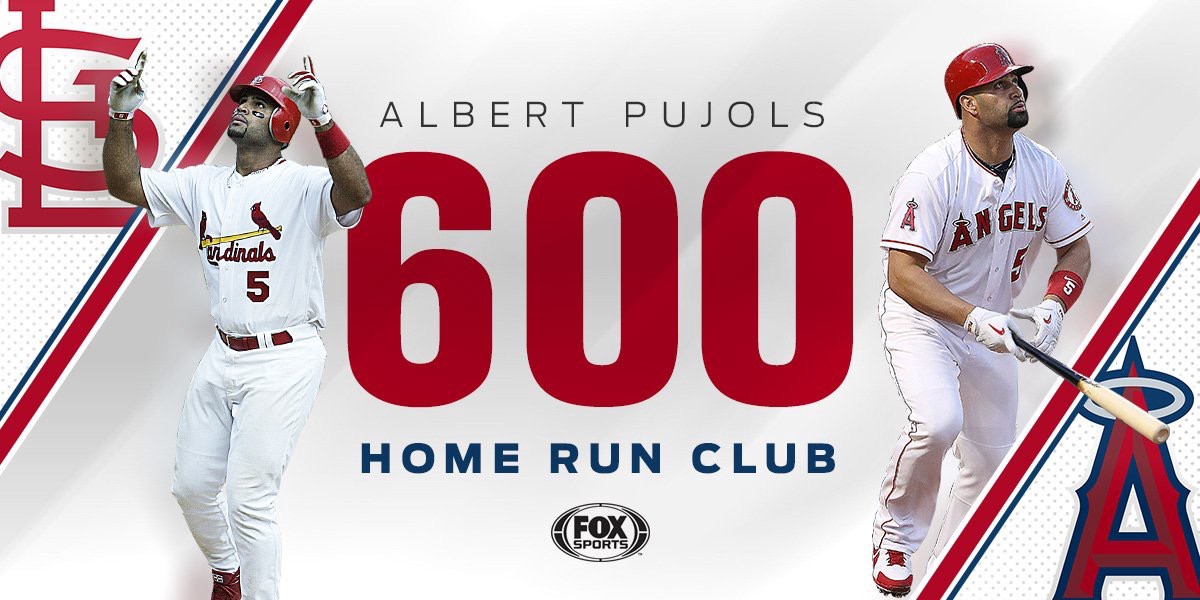
It only makes sense to talk about the 600 Home Run Club for my 600th post, one of the most exclusive clubs throughout the history of America's pastime. Let's break down the numbers. 600 home runs would take an average of 30 homers for 20 years. Considering the 500 Home Run Club is about three times as plentiful, you can understand how truly hard it is to hit 600 career home runs. Besides the steroid-users, every member of the 600 Home Run Club is in the Hall of Fame, so let's talk about some of those MLB legends.
Jim Thome
The king of the walk-off home run totaled 612 home runs during his 22-year career with mainly the Indians. What's interesting to look at with Thome is his lack of recognition as a power hitter throughout his career; he only made five All Star Games, the least amount of ASGs amongst the guys with 600+ homers (not including Babe Ruth, who played a majority of his career without an All Star Game). However, Jim was an integral part of the Cleveland teams of the 1990s, one of the greatest dynasties that wasn't a dynasty.
Ken Griffey, Jr.
The Kid is undeniably the best player in the history of the Seattle Mariners. If only he didn't beg for a trade to his hometown Cincinnati Reds. Anyway, Griffey's 630 homers rank seventh on the all-time list, helped out by league-leading years in home runs in 1994 (40 in only 111 games) and 1997-1999 (56, 56, and 48, respectively). He had 40 or more home runs in a season seven times and won the Home Run Derby a record three times.
Albert Pujols
Similar situation to Griffey, except his big drop-off in power came with free agency and not a trade. Nonetheless, Pujols is one of the greatest hitters of my generation. Besides having 656 career home runs, he also has 3,202 career hits, making him one of four hitters in history with 600+ homers and 3,000+ hits. Pujols's 35 homers a season is the highest average homers per year among members of the 600 Home Run Club, and is also the active leader in career home runs.
Willie Mays
We move into the Top Five! The Say Hey Kid smacked 660 career homers during his 22-year run with the Giants and Mets, cementing himself as one of the candidates for baseball's Mount Rushmore. Mays was a four-time home run champ and is the only military veteran of the 600 Home Run Club. He is also the fastest member of the club, with 338 career stolen bases.
Babe Ruth
THE BEST HITTER IN BASEBALL HISTORY (sorry, I just had to reiterate that statement) was the first member of the 200, 300, 400, 500, 600, and 700 Home Run Clubs. His 714 home runs were the highest in baseball history for 39 years, and the metric currently ranks third all-time. He is the only member of the club who played in the first half of the 20th century, but is also the club member with the most single-season home run titles (12).
Hank Aaron
The second member of the 700 Home Run Club ended his career with 756 home runs, which currently ranks second on the all-time list. However, among members of the 600 Home Run Club, he ranks first in hits (third all-time with 3,771) RBIs, and All Star Game appearances (his 2,297 careers runs batted in and 25 All Star Games are both first all-time). Aaron was a four-time home run champ, and is another candidate for baseball's Mount Rushmore.
Thanks again to everyone for supporting me through 600 posts, and I hope you enjoyed this particular post. Check back soon for more of "all the buzz on what wuzz."
Today is the eight-year anniversary of my very first blog post AND my 600th post! Thank you so much to everyone who has read my stuff over these past eight wonderful years, whether you're a day one fan or are just stumbling upon my posts this year. Now, onto the baseball history!
It only makes sense to talk about the 600 Home Run Club for my 600th post, one of the most exclusive clubs throughout the history of America's pastime. Let's break down the numbers. 600 home runs would take an average of 30 homers for 20 years. Considering the 500 Home Run Club is about three times as plentiful, you can understand how truly hard it is to hit 600 career home runs. Besides the steroid-users, every member of the 600 Home Run Club is in the Hall of Fame, so let's talk about some of those MLB legends.
Jim Thome
The king of the walk-off home run totaled 612 home runs during his 22-year career with mainly the Indians. What's interesting to look at with Thome is his lack of recognition as a power hitter throughout his career; he only made five All Star Games, the least amount of ASGs amongst the guys with 600+ homers (not including Babe Ruth, who played a majority of his career without an All Star Game). However, Jim was an integral part of the Cleveland teams of the 1990s, one of the greatest dynasties that wasn't a dynasty.
Ken Griffey, Jr.
The Kid is undeniably the best player in the history of the Seattle Mariners. If only he didn't beg for a trade to his hometown Cincinnati Reds. Anyway, Griffey's 630 homers rank seventh on the all-time list, helped out by league-leading years in home runs in 1994 (40 in only 111 games) and 1997-1999 (56, 56, and 48, respectively). He had 40 or more home runs in a season seven times and won the Home Run Derby a record three times.
Albert Pujols
Similar situation to Griffey, except his big drop-off in power came with free agency and not a trade. Nonetheless, Pujols is one of the greatest hitters of my generation. Besides having 656 career home runs, he also has 3,202 career hits, making him one of four hitters in history with 600+ homers and 3,000+ hits. Pujols's 35 homers a season is the highest average homers per year among members of the 600 Home Run Club, and is also the active leader in career home runs.
Willie Mays
We move into the Top Five! The Say Hey Kid smacked 660 career homers during his 22-year run with the Giants and Mets, cementing himself as one of the candidates for baseball's Mount Rushmore. Mays was a four-time home run champ and is the only military veteran of the 600 Home Run Club. He is also the fastest member of the club, with 338 career stolen bases.
Babe Ruth
THE BEST HITTER IN BASEBALL HISTORY (sorry, I just had to reiterate that statement) was the first member of the 200, 300, 400, 500, 600, and 700 Home Run Clubs. His 714 home runs were the highest in baseball history for 39 years, and the metric currently ranks third all-time. He is the only member of the club who played in the first half of the 20th century, but is also the club member with the most single-season home run titles (12).
Hank Aaron
The second member of the 700 Home Run Club ended his career with 756 home runs, which currently ranks second on the all-time list. However, among members of the 600 Home Run Club, he ranks first in hits (third all-time with 3,771) RBIs, and All Star Game appearances (his 2,297 careers runs batted in and 25 All Star Games are both first all-time). Aaron was a four-time home run champ, and is another candidate for baseball's Mount Rushmore.
Thanks again to everyone for supporting me through 600 posts, and I hope you enjoyed this particular post. Check back soon for more of "all the buzz on what wuzz."
Friday, March 27, 2020
My Idea for a Shortened Season 3/27/20
Hey baseball fans!
With the MLB officially starting late as of yesterday, it's time for the league, the fans, and anyone else who cares about America's pastime to come up with alternative scenarios regarding how the season should play out. So, here's mine. Note: I am assuming that the 2020 season will happen, and am keeping information in mind regarding the recent MLB-MLBPA agreement.
Even if it's without fans, it looks like the MLB season could start as early as June, but I'm going to say that it starts on July 1st. I think it's a terrible idea to do scheduled double-headers in this day and age, unlike in years past (I'm talking before WW2). I mean, you thought the Yankees were so injured before? Just wait until they have to start playing 14 games in seven days. However, I do think that a four-month season is acceptable and adaptable to service time, contracts, and any other time-related factors that go into a baseball season. Why do I say four months, you ask? Well, the 1981 MLB strike caused a stoppage of play, shortening the season to, you guessed it, four months. Obviously, this stoppage is much different than the one now, but we've seen a four-month MLB season in the past, and at the current moment with the information we have, I think it makes the most sense.
So, July 1st to October 31st would be the MLB regular season. The All Star Game would be moved to late August and the trade deadline to mid-September. The postseason would stay in the exact same format, but with less off-days if the matchups allow for it. A Yankees-Red Sox playoff series can be played across seven days, but a Mariners-Rays series might take nine or ten days (barring both series going to seven games). If the weather is closer to winter weather than Thanksgiving weather by late November, the World Series would be held at a neutral site, whether that site be domed (like Miller Park in Milwaukee) or in a hot location (like Dodger Stadium in LA).
I don't think it's a secret that this upcoming season is going to be one for the history books for all the wrong reasons, but it shouldn't be delegitimized, if it's played. The Dodgers' 1981 World Series championship over the Yankees is completely valid, as are the 1994 MVPs won by Frank Thomas and Jeff Bagwell, even without the '94 playoffs (and Albert Belle's 50 homers in 1995 are just iconic). It's just up to us to make the best of it. Stay strong and safe, baseball fans.
Thanks for reading this post and I hope you enjoyed it. Check back soon for more of "all the buzz on what wuzz."
With the MLB officially starting late as of yesterday, it's time for the league, the fans, and anyone else who cares about America's pastime to come up with alternative scenarios regarding how the season should play out. So, here's mine. Note: I am assuming that the 2020 season will happen, and am keeping information in mind regarding the recent MLB-MLBPA agreement.
Even if it's without fans, it looks like the MLB season could start as early as June, but I'm going to say that it starts on July 1st. I think it's a terrible idea to do scheduled double-headers in this day and age, unlike in years past (I'm talking before WW2). I mean, you thought the Yankees were so injured before? Just wait until they have to start playing 14 games in seven days. However, I do think that a four-month season is acceptable and adaptable to service time, contracts, and any other time-related factors that go into a baseball season. Why do I say four months, you ask? Well, the 1981 MLB strike caused a stoppage of play, shortening the season to, you guessed it, four months. Obviously, this stoppage is much different than the one now, but we've seen a four-month MLB season in the past, and at the current moment with the information we have, I think it makes the most sense.
So, July 1st to October 31st would be the MLB regular season. The All Star Game would be moved to late August and the trade deadline to mid-September. The postseason would stay in the exact same format, but with less off-days if the matchups allow for it. A Yankees-Red Sox playoff series can be played across seven days, but a Mariners-Rays series might take nine or ten days (barring both series going to seven games). If the weather is closer to winter weather than Thanksgiving weather by late November, the World Series would be held at a neutral site, whether that site be domed (like Miller Park in Milwaukee) or in a hot location (like Dodger Stadium in LA).
I don't think it's a secret that this upcoming season is going to be one for the history books for all the wrong reasons, but it shouldn't be delegitimized, if it's played. The Dodgers' 1981 World Series championship over the Yankees is completely valid, as are the 1994 MVPs won by Frank Thomas and Jeff Bagwell, even without the '94 playoffs (and Albert Belle's 50 homers in 1995 are just iconic). It's just up to us to make the best of it. Stay strong and safe, baseball fans.
Thanks for reading this post and I hope you enjoyed it. Check back soon for more of "all the buzz on what wuzz."
Friday, March 13, 2020
The 1944 MLB Season: How Another World Conflict Affected Baseball 3/13/20
Hey baseball fans!
With the recent delay of Opening Day by Major League Baseball because of the spreading coronavirus, it got me thinking about how the MLB season has been changed in the past. 9/11 paused the 2001 MLB season for about a week, while the strikes of 1981 and 1994/1995 erased games and even introduced new playoff formats. But another historic event, World War II, didn't stop the MLB from playing its games, creating a wild race for the World Series, specifically in 1944, the penultimate year of the war.
President Franklin Roosevelt issued something called the "Green Light Letter," which asked baseball to continue operations amidst the global conflict known as World War II. The United States entered the war in December of 1941, after the Japanese bombed Pearl Harbor. So, to help the war effort, the US military issued a draft for males ranging from 18-37 years old. Well, even though the MLB didn't stop for World War II, the age of the eligible draftees made it so plenty of MLB players were drafted into the military. In total, over a period of five years, 500 major league and over 2,000 minor league players were drafted into the deadliest war in human history. For reference, the MLB was only 16 teams at the time, and major league roster sizes were 24 players, meaning that a massive, incomprehensible percentage of the MLB rosters at the time went to serve overseas. Some of the more famous MLB and WW2 veterans include Joe DiMaggio, Ted Williams, Yogi Berra, Hank Greenberg, and Stan Musial (pictured below in his sailor's uniform).
But Stan the Man didn't serve until 1945, meaning he was still on the Cardinals roster in 1944 to help lead them to the top of the National League. The 1944 St. Louis Cardinals were without future Hall of Famers Red Schoendienst (which is harder to spell than Yastrzemski, by the way) and Enos Slaughter, but still managed to win 105 games and the NL pennant on the back of baseball's best pitching staff, which allowed only 3.1 runs per game, and 1944 MVP and slick-fielding shortstop, Marty Marion. Those 105 wins (and 49 losses because of the 154-game season back then) actually proved to be baseball's best record, only because the rest of the league did absolutely nothing! After the Cardinals, the Pirates finished in second among the 16 teams in '44 with only 90 wins. And the AL was even worse! No team finished above 89 wins because of the shortage of talent, meaning that at the end of the season, it was the rest of the AL looking up at the St. Louis Browns.
Yeah, that's right: the St. Louis Browns, the present-day Baltimore Orioles! The AL, especially, was so dry of the talent that made baseball so beloved, that one of the worst teams in baseball history up to that point made their first World Series appearance. Of course, the Cardinals won the Series in six games, giving them their second of three titles in a five-year span from 1942-1946, but at least the Browns got to call themselves the best of the worst, you know?
Eventually, the MLB and the United States rejoiced in an Allied victory, and baseball returned to normal. The Browns moved to Baltimore for the '54 season and won the franchise's first championship in 1966. Thanks for reading this post and I hope you enjoyed it. Check back soon for more of "all the buzz on what wuzz."
With the recent delay of Opening Day by Major League Baseball because of the spreading coronavirus, it got me thinking about how the MLB season has been changed in the past. 9/11 paused the 2001 MLB season for about a week, while the strikes of 1981 and 1994/1995 erased games and even introduced new playoff formats. But another historic event, World War II, didn't stop the MLB from playing its games, creating a wild race for the World Series, specifically in 1944, the penultimate year of the war.
President Franklin Roosevelt issued something called the "Green Light Letter," which asked baseball to continue operations amidst the global conflict known as World War II. The United States entered the war in December of 1941, after the Japanese bombed Pearl Harbor. So, to help the war effort, the US military issued a draft for males ranging from 18-37 years old. Well, even though the MLB didn't stop for World War II, the age of the eligible draftees made it so plenty of MLB players were drafted into the military. In total, over a period of five years, 500 major league and over 2,000 minor league players were drafted into the deadliest war in human history. For reference, the MLB was only 16 teams at the time, and major league roster sizes were 24 players, meaning that a massive, incomprehensible percentage of the MLB rosters at the time went to serve overseas. Some of the more famous MLB and WW2 veterans include Joe DiMaggio, Ted Williams, Yogi Berra, Hank Greenberg, and Stan Musial (pictured below in his sailor's uniform).
But Stan the Man didn't serve until 1945, meaning he was still on the Cardinals roster in 1944 to help lead them to the top of the National League. The 1944 St. Louis Cardinals were without future Hall of Famers Red Schoendienst (which is harder to spell than Yastrzemski, by the way) and Enos Slaughter, but still managed to win 105 games and the NL pennant on the back of baseball's best pitching staff, which allowed only 3.1 runs per game, and 1944 MVP and slick-fielding shortstop, Marty Marion. Those 105 wins (and 49 losses because of the 154-game season back then) actually proved to be baseball's best record, only because the rest of the league did absolutely nothing! After the Cardinals, the Pirates finished in second among the 16 teams in '44 with only 90 wins. And the AL was even worse! No team finished above 89 wins because of the shortage of talent, meaning that at the end of the season, it was the rest of the AL looking up at the St. Louis Browns.
Yeah, that's right: the St. Louis Browns, the present-day Baltimore Orioles! The AL, especially, was so dry of the talent that made baseball so beloved, that one of the worst teams in baseball history up to that point made their first World Series appearance. Of course, the Cardinals won the Series in six games, giving them their second of three titles in a five-year span from 1942-1946, but at least the Browns got to call themselves the best of the worst, you know?
Eventually, the MLB and the United States rejoiced in an Allied victory, and baseball returned to normal. The Browns moved to Baltimore for the '54 season and won the franchise's first championship in 1966. Thanks for reading this post and I hope you enjoyed it. Check back soon for more of "all the buzz on what wuzz."
Saturday, February 29, 2020
A Study on Teams in the Spring Training States 2/29/20
Hey baseball fans!
2020 Spring Training is officially upon us, which means we don't care about the American and National Leagues right now. It's all about Grapefruit and Cactus Leagues! During Spring Training, the eastern MLB teams head to Florida, while the teams in the west head to Arizona. What's interesting about this is that Florida and Arizona were some of the last states to get baseball teams. Why is that important? Read on to find out!
It's no coincidence that the Rays, Marlins, and Diamondbacks are three teams that could look to relocation in the coming future. Just this week, it was released that the D-Backs have talked about moving to Vancouver, having visited the Canadian city and hometown of Seth Rogen twice in the last two years. I actually really like the Diamondbacks stadium and their attendance is only so-so, not dwindling like the Rays and Marlins. So, why the potential move? Well, in 1946, when Bill Veeck convinced the Indians and Giants (then in New York) to play some Spring Training games in Phoenix, wanting to rid his franchise (he had just bought the Indians) of the African-American discrimination of Florida, he inadvertently created the Cactus League. The Grapefruit League was formed years before, some claiming as early as 1913. So, by the time the Marlins (1993), Rays, and Diamondbacks (both 1998) came into existence, for four to six weeks of every February and March, Floridians and Arizonans got front row seats to their favorite teams outside their state.
The Yankees and Dodgers have well-known fan bases in Florida, dating back to when the Dodgers were in Brooklyn. "Dodgertown" in Vero Beach, Florida became a hub for Dodger fans in the eastern part of the country as early as 1948. Meanwhile, the Yankees have been playing in George M. Steinbrenner Field since 1996, two years before the Rays moved into the exact same metropolitan area. As for the Diamondbacks? Well, the Cactus League had as many as nine teams playing Spring Training games in Arizona in 1989, also the year when two western teams, the Giants and A's, were in the World Series. My point here is that the MLB placed expansion teams in cities where a lot of fans rooted for other teams. Now, all three teams have made the World Series in the 20+ years of their respective existences, but their current success is satisfactory at best (and even worse for the Marlins).
So, I raise the point again, just like I have so many times before: relocation and expansion is how to keep a sport from going stale. Arizona to Las Vegas, Tampa to Montreal, and Miami to Charlotte or Nashville (not to mention Oakland to Portland). Leave the Sunshine and Grand Canyon States for baseball in the winter. Thanks for reading this post and I hope you enjoyed it. Check back soon for more of "all the buzz on what wuzz."
2020 Spring Training is officially upon us, which means we don't care about the American and National Leagues right now. It's all about Grapefruit and Cactus Leagues! During Spring Training, the eastern MLB teams head to Florida, while the teams in the west head to Arizona. What's interesting about this is that Florida and Arizona were some of the last states to get baseball teams. Why is that important? Read on to find out!
It's no coincidence that the Rays, Marlins, and Diamondbacks are three teams that could look to relocation in the coming future. Just this week, it was released that the D-Backs have talked about moving to Vancouver, having visited the Canadian city and hometown of Seth Rogen twice in the last two years. I actually really like the Diamondbacks stadium and their attendance is only so-so, not dwindling like the Rays and Marlins. So, why the potential move? Well, in 1946, when Bill Veeck convinced the Indians and Giants (then in New York) to play some Spring Training games in Phoenix, wanting to rid his franchise (he had just bought the Indians) of the African-American discrimination of Florida, he inadvertently created the Cactus League. The Grapefruit League was formed years before, some claiming as early as 1913. So, by the time the Marlins (1993), Rays, and Diamondbacks (both 1998) came into existence, for four to six weeks of every February and March, Floridians and Arizonans got front row seats to their favorite teams outside their state.
The Yankees and Dodgers have well-known fan bases in Florida, dating back to when the Dodgers were in Brooklyn. "Dodgertown" in Vero Beach, Florida became a hub for Dodger fans in the eastern part of the country as early as 1948. Meanwhile, the Yankees have been playing in George M. Steinbrenner Field since 1996, two years before the Rays moved into the exact same metropolitan area. As for the Diamondbacks? Well, the Cactus League had as many as nine teams playing Spring Training games in Arizona in 1989, also the year when two western teams, the Giants and A's, were in the World Series. My point here is that the MLB placed expansion teams in cities where a lot of fans rooted for other teams. Now, all three teams have made the World Series in the 20+ years of their respective existences, but their current success is satisfactory at best (and even worse for the Marlins).
So, I raise the point again, just like I have so many times before: relocation and expansion is how to keep a sport from going stale. Arizona to Las Vegas, Tampa to Montreal, and Miami to Charlotte or Nashville (not to mention Oakland to Portland). Leave the Sunshine and Grand Canyon States for baseball in the winter. Thanks for reading this post and I hope you enjoyed it. Check back soon for more of "all the buzz on what wuzz."
Friday, February 21, 2020
Five Teams That Need New Threads 2/21/20
Hey baseball fans!
MLB The Show 20 comes out next month, and one of the biggest additions to the latest edition of the beloved video game franchise is the long-awaited chance to change a team's entire identity in Franchise Mode. In honor of this new option, let's talk about teams that need a rebrand in the current MLB landscape.
#5: New York Yankees
Why? Don't hate on my idea just yet. Obviously the Yankees look is iconic, but it's time for some updates to the formula. I'm not saying they should change their main color to pink, but maybe an alternate uniform with some pizazz is in order. They should really use their logo with the baseball and the bat as the leg of the "K" more often, for starters.
#4: Los Angeles Angels
Why? Among all the teams that could use a name change, "The Angels Angels" is towards the top of the list. I also wouldn't mind seeing the Halos go back to their powder blues or their midnight blue hats. I'm just not a fan of the red right now.
#3: Chicago Cubs
Why? Same reason as the Yankees. It's about time the Cubbies updated their uniforms in a drastic way. I mean, their logo is a bear. Why not try something brown? I know it sounds bad, but the Padres certainly pull it off. Also, what do cubs (or Bears) have to do with Chicago? I know the Cubs got their name from their young roster when the name was decided, but Chicago is such a unique and historical city that I'm surprised the Cubs moniker has stuck around for so long.
#2: Colorado Rockies
Why? The purple just hasn't worked in Colorado and the name is just a mountain range. I mean, their mascot is a Triceratops, so maybe that could establish a name. "Colorado Carnivores" sounds a lot more intimidating than "Colorado Rockies." And what kid doesn't go through a dinosaur phase?
#1: Seattle Mariners
Why? You want to talk about a team that has an allegorical name? Well, the Mariners' front office is on a sinking ship. The teal is great, but the name isn't, especially considering its association with the only remaining team to never reach a World Series. I put this at number one for the dire situation the franchise is in. I actually like the Mariners uniforms and name, but the threads and name are sadly associated with losing. Sometimes, a new look is all a team needs to break through.
What other teams need a rebranding? Let me know in the comments section below. Thanks for reading this post and I hope you enjoyed it. Check back soon for more of "all the buzz on what wuzz."
MLB The Show 20 comes out next month, and one of the biggest additions to the latest edition of the beloved video game franchise is the long-awaited chance to change a team's entire identity in Franchise Mode. In honor of this new option, let's talk about teams that need a rebrand in the current MLB landscape.
#5: New York Yankees
Why? Don't hate on my idea just yet. Obviously the Yankees look is iconic, but it's time for some updates to the formula. I'm not saying they should change their main color to pink, but maybe an alternate uniform with some pizazz is in order. They should really use their logo with the baseball and the bat as the leg of the "K" more often, for starters.
#4: Los Angeles Angels
Why? Among all the teams that could use a name change, "The Angels Angels" is towards the top of the list. I also wouldn't mind seeing the Halos go back to their powder blues or their midnight blue hats. I'm just not a fan of the red right now.
#3: Chicago Cubs
Why? Same reason as the Yankees. It's about time the Cubbies updated their uniforms in a drastic way. I mean, their logo is a bear. Why not try something brown? I know it sounds bad, but the Padres certainly pull it off. Also, what do cubs (or Bears) have to do with Chicago? I know the Cubs got their name from their young roster when the name was decided, but Chicago is such a unique and historical city that I'm surprised the Cubs moniker has stuck around for so long.
#2: Colorado Rockies
Why? The purple just hasn't worked in Colorado and the name is just a mountain range. I mean, their mascot is a Triceratops, so maybe that could establish a name. "Colorado Carnivores" sounds a lot more intimidating than "Colorado Rockies." And what kid doesn't go through a dinosaur phase?
#1: Seattle Mariners
Why? You want to talk about a team that has an allegorical name? Well, the Mariners' front office is on a sinking ship. The teal is great, but the name isn't, especially considering its association with the only remaining team to never reach a World Series. I put this at number one for the dire situation the franchise is in. I actually like the Mariners uniforms and name, but the threads and name are sadly associated with losing. Sometimes, a new look is all a team needs to break through.
What other teams need a rebranding? Let me know in the comments section below. Thanks for reading this post and I hope you enjoyed it. Check back soon for more of "all the buzz on what wuzz."
Subscribe to:
Posts (Atom)


